SynPlan’s bold leap across the pond
Norwegian startup eyes health care transformation

Photo courtesy of Lars Dahle
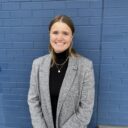
SynPlan CEO Lars Dahle is outside Mayo Clinic in Rochester, Minn., where the Norwegian health tech company is advancing its collaboration to bring artificial intelligence driven staffing solutions to the U.S. health care system.
When Lars Dahle, CEO and co-founder of SynPlan, recently traveled from Norway to Minnesota, it wasn’t just to attend a health care conference — it marked a pivotal moment for the company’s U.S. ambitions. Between back-to-back meetings with prospective partners and collaborators, Dahle spoke with The Norwegian American about how a small Norwegian tech company suddenly finds itself at the heart of one of America’s most prestigious health care networks: Mayo Clinic.
SynPlan is an artificial intelligence company focused on solving one of the most persistent — and costly — problems in modern health care: unpredictable staffing and short-term absences due to illness. Founded in Norway with a lean team of just nine people, SynPlan combines deep technological expertise with real-world health care insights, and now, it’s bringing its vision to the United States.
A personal mission to improve health care
For Dahle, improving health care systems isn’t just a business strategy — it’s deeply personal. Though he comes from a technical background, his wife is a nurse, and his daughter is a medical doctor. Their firsthand experiences have given him an intimate look into the emotional and logistical strain that unpredictable schedules place on health care workers.
“My daughter often tells me how exhausting it is to work unpredictable shifts — late nights, weekends — and how frustrating it is to get last-minute calls to cover for sick colleagues,” Dahle explains. “There’s constant pressure and very little predictability.”
These personal insights helped shape SynPlan’s mission and technology. The company’s chief technology officer and founder, Hai Nguyen, previously an associate professor in AI and machine learning at NTNU, was first approached by the city of Trondheim to explore how AI could be used to address staffing challenges. With over a decade of experience, including high-level work at Telenor ASA, Nguyen used his expertise to analyze years of anonymized data from health care departments. The result was a predictive AI model capable of forecasting staff absences weeks or even months in advance.
“After two years of development, we created a model that can predict how many staff will call in sick, up to a year ahead,” says Dahle. “This gives hospitals the chance to plan ahead and avoid the chaos of last-minute scheduling.”
Proven results in Norway — and a need to look abroad
The system was first tested in Oslo, where the results were dramatic. Overtime hours dropped by 80% in some departments. In one case, a unit reported zero overtime in the final month of the trial. Sick leave related staffing expenses were cut by 66%. And perhaps most important, health care workers preferred the new system.
“Some thought nurses would miss the overtime pay,” Dahle says. “But when given a choice, they picked shifts weeks in advance rather than scrambling the day before. They wanted predictability. They wanted work-life balance.”
Despite the clear impact, SynPlan’s growth in Norway faced hurdles. Even municipalities that saved millions annually couldn’t proceed due to spending freezes or bureaucratic slowdowns. “We realized we had to look abroad if we wanted to grow and survive,” Dahle says.
A surprising phone call
Opportunity came through Innovation Norway, which arranged a meeting between Norwegian startups and visiting tech scouts from Mayo Clinic. Of the more than 40 health tech companies in Oslo, SynPlan was among the few chosen for follow-up.
For a while, though, things went quiet. As the weeks and months passed, the team began to assume that Mayo had moved on. Then, in the final days of 2024, an unexpected call came through.
“At first, we were surprised,” Dahle says. “Right before Christmas, Mayo Clinic reached out and said they wanted to collaborate.”
The collaboration is with Mayo Clinic Platform, the health system’s innovation hub for integrating emerging technologies like AI into real-world hospital operations. Following a rigorous vetting process, SynPlan was designated as a qualified partner by Mayo Clinic, clearing the way for the next phase of collaboration within its network of more than 40 hospitals.
What makes this partnership noteworthy is Mayo Clinic’s strategic approach to innovation. “They don’t do pilots anymore,” Dahle says. “They do staged rollouts with intent to scale. That’s incredibly exciting for us. Mayo is the gold standard in health care.”
Dahle was invited to attend the PlatforMed 2025 conference in Minneapolis in early June, hosted by Mayo. Over 250 leaders from health care, tech, government, and academia gathered to explore how platform-based models can drive improvements in care.
This summer, SynPlan will begin training Mayo’s platform sales team on how to use and present their system. The long-term goal is to integrate SynPlan’s AI scheduling tools throughout Mayo’s network.

Photo: Lars Dahle
SynPlan CEO Lars Dahle attended a panel discussion that explored how artificial intelligence and platform models are transforming health care at PlatforMed 2025 in Minneapolis.
Entering a new market: Minnesota and beyond
But to make this dream a reality, SynPlan knows it can’t simply drop into the U.S. market with a Norwegian playbook. They need what Dahle calls “radical local understanding.”
“The United States is a far more dynamic and expansive market compared with Norway,” he says. “There’s more flexibility and openness to innovation, especially for early movers like us.”
To meet demand and prepare for growth, SynPlan is now laying the foundation for a U.S.-based team. The focus is on hiring people with experience in the U.S. health care system — people who understand the specific operational, regulatory, and cultural nuances of hospitals in the United States.
“We’re setting up a company here, talking to lawyers, and looking to hire people who have ‘worn the shoes,’ so to speak,” Dahle says. “We need professionals who not only understand the technical side, but also the human and organizational challenges of U.S. health care.”
SynPlan is already forging local partnerships to support this expansion. In Minnesota, the company is collaborating with groups like BARN (Business Accelerator Resource Network) at Norway House, NorCham, and StartUSA to establish networks and tap into the Norwegian-American business community.
From ambition to execution with funding
Despite its momentum, SynPlan faces a major obstacle: funding. While the company raised capital in Norway to support domestic operations, entering the U.S. health care market — especially on the scale of Mayo Clinic — requires significantly more resources.
“We’re in a completely different league now,” Dahle says. “If we’re going to serve a system like Mayo properly, we need capital to grow a qualified team here.”
He believes that for the right investor, this is a rare and meaningful opportunity. “This is your chance to get in on the ground floor of something that could truly reshape how hospitals operate — not just in the United States, but globally.”
With a proven track record in Norway, a strategic partner in Mayo Clinic, and a passionate team driven by real-world health care experience, SynPlan is poised to play a transformative role in the future of hospital workforce planning.
“We’re at a critical moment,” says Dahle. “AI is advancing quickly. If we wait too long to act, we risk falling behind. But if we move now, we can build something truly impactful.”
For SynPlan, Minnesota may be just the beginning. But from a dock in Oslo to the halls of Mayo Clinic, the journey is already proving how far a small, mission-driven company can go — with the right mix of vision, technology, and timing.
This article originally appeared in the July 2025 issue of The Norwegian American.