Norwegian Methodism in North America
Finding religous freedom in a new land

Phots courtesy of Leslee Lane Hoyum
The Bethlehem church choir performed at its conference in 1910. The author’s grandmother stands in the second row fourth from the left.
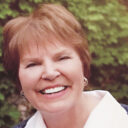
Leslee Lane Hoyum
Rockford, Minn.
This year, we are celebrating the bicentennial of the first organized emigration from Norway to the United States, most of us are reflecting on the reasons that our ancestors came to America. Many believe it was for free land under the Homestead Act, economic prospects, or overcrowding in Norway, which are, indeed, part of the story. Often, we forget that the 1825 “Sloopers” on the Restauration came for religious freedom. Even in 1907, freedom of religion was my grandfather’s reason for emigrating. You see, he was a Methodist.
In 1847, Ole Peter Petersen, a sailor from Fredrikstad, Norway, joined the Methodist Church in New York after being inspired by Methodism founder John Wesley’s belief that “in this life, Christians could achieve a state where the love of God ‘reigned supreme in their hearts.’” He gained greater insight into his newfound convictions by working as an assistant to Swedish-born minister Olof Gustaf Hedstrom, who ministered to the sailors on the cargo ship John Wesley. This experience motivated Petersen to return home and share his beliefs.
At home in 1849 Østfold, Petersen began preaching his newfound faith. Within months, he had converted many people in Fredrikstad and neighboring Sarpsborg. Among them were my paternal grandfather’s family members. Petersen then returned to the United States in 1853 for ordination as a minister of the Methodist Episcopal Church. Once again, he sailed home.
In his rented home in Sarpsborg, the second story was converted to a meeting room—the first Methodist facility in the country. However, as more believers joined, the need for the first Methodist Church grew. It was built in 1857, and it is the church to which my Lanne family belonged and the church I attend when in Norway.
By 1876, the Methodist church in Norway was large enough to receive status as an Annual Conference. There were 29 pastors, 19 congregations, and 2,798 members.
Unfortunately, there were consequences for not belonging to the State Church of Norway. Under the Norwegian Dissenter Act of 1845, Christian denominations other than the Church of Norway could establish themselves, but dissenters were not granted full civil rights. For example, they were banned from specific professions, such as teaching, nursing, civil service positions, and the judiciary. Furthermore, they were denied certain educational opportunities. Therefore, my family members were very limited in their life choices. Believe it or not, the Dissenter Act was not abolished until 1969, when the Norwegian Constitution was amended to grant full religious freedom.
My grandfather was weary of being disregarded by society just because he was a Methodist. With two uncles, an aunt, and a sister already living in Minnesota, Johannes Olsen Lanne decided to leave Norway for North America, where his religious views would not impede his educational or economic advancement. His last evening in Sarpsborg, he attended choir practice and walked his girlfriend, Lisa, home. He didn’t see her again for 52 years.

Photo courtesy of Leslee Lane Hoyum
The author’s great-grandparents’ names appear in the original charter for Minneapolis’ Bethlehem Norwegian-Danish Methodist Church.
After arriving in Minneapolis, Grandpa was quick to seek out a Norwegian Methodist church. He found Bethlehem Norwegian-Danish Methodist Church on the north side. The choice determined his future when he met charter members Charles and Dorothea Swenson. By the way, he immediately joined the choir and found a new girlfriend, Bertha Swenson, the church organist and pianist, who became my grandmother.
So, why was Bethlehem known as a Norwegian-Danish Methodist Church? The nations’ Methodist churches were closely aligned, most likely through their close geographic proximity and the fact that Denmark ruled Norway from 1537 to 1814. Furthermore, it was a Danish immigrant to America, Pastor Christian B. Willerup, who helped Petersen establish the first Methodist congregation in Norway and build the Sarpsborg Methodist Church. Additionally, Willerup was appointed district superintendent for Scandinavia in 1856 to specifically develop the faith throughout Norway. The Norwegian-Danish alliance continued in America to which both men eventually returned to spend the rest of their lives in service to Methodism.
By 1760, Methodism was well established in America, long before most Norwegians arrived. It was easy to join an already established church, but most immigrants found comfort in worshipping, singing, and praying in their native language. Their similar beliefs gave them reassurance, strength, and hope as they celebrated or mourned.
The Upper Midwest was a stronghold of Norwegian-Danish Methodism. In fact, the first affiliated church was built and dedicated in Cambridge, Wis., in 1852, making it the oldest Scandinavian Methodist church on either side of the Atlantic. It was designed by none other than the Rev. Christian B. Willerup. Willerup Church continues today as a vibrant and active congregation.
Thomas Hardy once said, “Time changes everything except something within us, which is always surprised by change.” That holds true of Norwegian-Danish Methodism. At one time, the church was alive and growing with its own conference. However, the conference lasted only 63 years and dissolved in 1943, when it was absorbed into the framework of the Methodist Episcopal Church. Most members no longer had a need to hear the gospel in Norwegian, Danish, Swedish, or German. The ties to the “old country” had loosened.

Photo courtesy of Leslee Lane Hoyum
The Methodist Church in Sarpsborg, Norway, as it stands today. The original church burned down on Dec. 25, 1992, in a wave of church arsons.
Bethlehem Norwegian-Danish Methodist Church ceased Norwegian services around 1959. I was very young but was proud to know that my father had been selected to sing accompanied by my grandmother at its final Norwegian service. A little more than 100 years after the construction of the Willerup Church in Wisconsin, the Norwegian-Danish Methodist Church in America was no longer relevant.
What remain relevant, however, are its values that live in all who experienced Norwegian-Danish Methodism, whether personally or through parents or grandparents. Those values were instilled by the church’s teachings on social justice, compassion, and the act of expressing one’s faith through kindness, charity, and service to others. It is probably best expressed by Danish-American poet Adam Dan: “We must gather around the old, lest the new that we are building tumble. Memory is the mother of the future.”
On Feb. 25, Thelma Boeder, former archivist for the Minnesota United Methodist Annual Conference, will continue the story with her presentation about “Methodist Norwegians in the United States” at Tuesday Open House at Mindekirken in Minneapolis. Be sure to hear “the rest of the story.” To make a reservation, go to mindekirken.org/tuesday-open-house.
This article originally appeared in the February 2025 issue of The Norwegian American.